
World leaders thanked India for its help and support in combating the coronavirus pandemic through "early and meaningful" shipments of COVID-19 vaccine doses, as they addressed the high-level UN General Assembly session this year.

After his wide-ranging talks with Modi on the second and final day of his India visit, Johnson said the new defence and security partnership will enable India to strengthen its domestic defence industry as well as help the two countries protect vital shared interests in the Indo-Pacific.

Citing India's commitment to deep economic reforms and ease of doing business, Prime Minister Narendra Modi asserted on Monday that this is the best time to invest in the country as policy-making is focussed on the needs for the next 25 years for a 'clean and green' as well as 'sustainable and reliable' growth period. In his special address to the World Economic Forum's online Davos Agenda 2022 summit, Modi underlined a host of reform measures undertaken by his government to stress that it has worked to reduce the administration's interference in business by deregulating many sectors and to clear the way for free trade agreements with different countries. India was once associated with "license raaj", he noted and highlighted the measures, including reduction of corporate tax to boost business and doing away with over 25,000 compliance requirements.

Serum Institute already has two deals of 100 million each to supply the Oxford-AstraZeneca and the Novavax vaccine to Gavi-Covax at $3 per dose.

China's deteriorating economy is a serious concern. Xi Jinping and China's new premier will have a difficult task ahead of them after the 20th party congress, notes Jayadeva Ranade, the retired senior RA&W officer and China expert.

India's equity markets are on a roller-coaster ride, after delivering spectacular returns for two consecutive years - in 2020 and 2021. The benchmark National Stock Exchange's (NSE's) Nifty50 is down 1.5 per cent in the first nine months of the current calendar year 2022 (CY22) as foreign portfolio investors sold Indian stocks due to rising bond yields in the US and across global markets, including India. The sell-off in the Indian equity markets has, however, not been broad-based and largely limited to sectors facing earnings headwinds from rising interest rates, lower commodity and energy prices, and likely economic recession in advanced economies.

Highlighting the role of MSMEs in enhancing exports and helping the country achieve self reliance, Union Minister Nitin Gadkari on Monday said India does not need to import from China. "Already in automobile sector, in many sectors now, in agriculture, automobiles, everywhere, we have already found the solutions. Now we don't need to import from China," said the minister. He observed that India was exporting a lot of items instead of importing them.

The Confederation of Indian Industry (CII) on Thursday said it believes that India-US bilateral economic ties would be a high priority for President Joe Biden-led administration in America. "The Indian industry feels that with President Biden and Prime Minister (Narendra) Modi at the helm, the two countries would play a strong role in re-shaping the global economic agenda together," CII president Uday Kotak said. Congratulating Biden on assuming charge as the 46th President of the US, Kotak said, "President Biden's experience in re-building the US economy during the Great Recession would help strengthen the US and global economic recovery in the aftermath of the pandemic."

The year 2021 could turn out to be India's year of IPO with the domestic unicorns through their public issues setting "domestic stock markets on fire and global investors in a frenzy", an RBI article said on Tuesday. The successful Initial Public Offerings (IPOs) by new age companies in the recent months are a reflection of bullishness about Indian technology, it said. "...growth impulse is igniting financial markets. 2021 could well turn out to be India's year of the IPO.

The government on Wednesday approved a production-linked incentive (PLI) scheme for the pharmaceutical sector, entailing an outlay of Rs 15,000 crore. The Union Cabinet, chaired by Prime Minister Narendra Modi, approved the scheme which will benefit domestic manufacturers, help create employment and is expected to contribute to the availability of a wider range of affordable medicines for consumers. The duration of the scheme would be from 2020-21 to 2028-29 and is expected to promote the production of high value products in the country and increase the value addition in exports, an official release said.

'We are having an outsize impact not only on the lives of the customers and livelihood, but also the economy of India.'

Tech major Lenovo on Thursday said it is significantly ramping up its local manufacturing capabilities in India across product categories like PCs, notebooks and smartphones to meet the increasing customer demand. While the company did not disclose the investment being made, Lenovo said it is expanding in India across all business lines, including PC and smart devices, smart phones, infrastructure solutions, and especially in the newly established services and solutions group. Lenovo has expanded its in-house PC manufacturing plant in Puducherry to include a third manufacturing line, while it has started local manufacturing of its tablet computers in partnership with Wingtech Technology in Tirupati, Andhra Pradesh.

The company is planning to invest Rs 1,100 crore in the new mobile phone manufacturing facility.

'India's future: To manufacture so efficiently that we do not need protection,' says Naushad Forbes.

The traditional model of IT is being commoditised and players are losing margins. Industry needs to focus on innovation-based start-ups for next round of growth.

Muzammil Patel and Rahul Murthi will answer all your start-up queries.

The government has created a comprehensive budget with sharp focus on sustaining economic activity and investment but more clarity is needed on areas like taxation framework for adopting remote working on a long-term basis, IT body Nasscom said on Monday. The industry association noted that the IT/ITeS (Information Technology-enabled Services) industry has been a key driver of growth and jobs in 2020 and there is an opportunity to significantly accelerate it further. "For the IT sector, one of the biggest needs ahead of us is the development of future business models, with hybrid working becoming a reality. "We look forward for the government to provide clarity on providing a framework in direct taxes and indirect taxes for the industry to adopt WFH/remote working on a long-term basis," Nasscom said in a statement.

'More a show that you are doing something in the Budget even if that something never actually comes to pass,' notes Nitin Desai.

'If Indians are as smart as their counterparts in university, and have equal opportunity, then what is the reason that we cannot produce inventions of quality that are recognised by the world?'

The UK government said on Tuesday that it has kicked off preparations for a free trade agreement (FTA) with India, launching a 14-week consultation to seek the views of the public and business before formal negotiations begin later this year. UK Trade Secretary Liz Truss said Britain wants a trade deal with India that pushes new frontiers and welcomes wide input from consumers and businesses across all sectors, which will help craft a deal that includes closer cooperation in "future-focused industries" such as science, technology and services, creating high-value jobs across the country. "We're firing the starting gun on a free trade deal with India - the world's largest democracy, fifth-biggest economy, a nation of 1.4 billion people and a huge market for British goods like whisky, cars and services," said Truss.

The report released by Britain's Department for Business, Innovation and Skills, which deals with British government permits for arms and security equipment exports, said besides Pakistan, Israel has exported military equipment to Egypt, Algeria, the United Arab Emirates and Morocco.

The McKinsey report said faster employment growth at 12 million non-farm jobs annually is needed in the post-Covid period till 2029-30, up from just four million created each year between 2012 and 2018.

The move will make it the first global automobile major to design a vehicle here

How Shibani Bhagat plans to rewrite the rules of the Indian sneaker business.

Draft covers technology, services and equipment related to exploration and production of metals and minerals, environment technology and services, human resources training and development, information exchange in research and innovation and seeking investment capital.

'The coronavirus epidemic highlights the need to start thinking more actively about multilateral coordination, including, but not confined to, health emergencies and climate uncertainties,' says Rathin Roy.
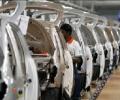
Australia is exploring possibilities of building better ties between its world-class firms and rapidly growing Indian automotive industries to create new export opportunities and help secure the ongoing strength of the multi-billion-dollar auto industry there.

10 stocks which are most popular with brokerages right now and are expected to deliver maximum upside over the next 12 months.

In an address at the Indian Council of World Affairs, he said Nepal wants to take the relations with India to the next level, but at the same time added: "We should be mindful equally that healthy relations require continuous nurturing, creative thinking, promptness and readiness to understand each other in changing dynamics."

'You need to devalue the currency, ignite inflation, which then begins to oil the wheels of the economy.' 'Without that this severe recession is not going to reverse.'

T N C Rajagopalan on the new year and new worries.

'The JF-17 is the aircraft of today and the Tejas is the aircraft of tomorrow.'
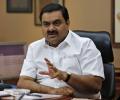
Billionaire Gautam Adani on Thursday said his logistics-to-energy conglomerate will invest $70 billion over the next decade to become the world's largest renewable energy company and produce world's cheapest hydrogen. Adani Green Energy Ltd (AGEL), the world's largest solar power developer, is targeting 45 gigawatts of renewable energy capacity by 2030 and will invest $20 billion to develop a 2 GW per year solar manufacturing capacity by 2022-23. Adani Transmission Ltd (ATL), India's largest private sector power transmission and retail distribution company, is looking to increase the share of renewable power procurement from the current 3 per cent to 30 per cent by FY 2023 and to 70 per cent by FY 2030.

'Aquaponics can effectively cushion the impact of a calamity like COVID.'

Sanjeev Nayyar offers a roster of things to do to see the India of our dreams.

India serves as the company's R&D hub as it morphs into a health tech major.

The new jobs - created both directly and indirectly - will be across industries, including IT, skill development, content creation, retail, logistics, and manufacturing.

'Defence funding is channelled to State-owned research organisations where scientists are merely bureaucrats holding meetings and sending out minutes of meetings and press releases, but have long ago stopped any innovative work.' 'Unless this tragedy is fixed, India's chances to create world-conquering and job-creating new industries are slim,' says Ajit Balakrishnan.

India has emerged as one of the top three choices for investments in the next 2-3 years, with more than two-thirds of respondents in a survey of multinational companies (MNCs) citing the country as their number one choice for future investments. According to the FDI survey released on Tuesday by CII in association with EY, about half of the respondents see India amongst the top three economies or leading manufacturing destinations of the world by 2025.
 © 2026 Rediff.com - Advertise with us - Disclaimer - Privacy Policy - Sitemap - Feedback - About us - Terms of use - Grievances